
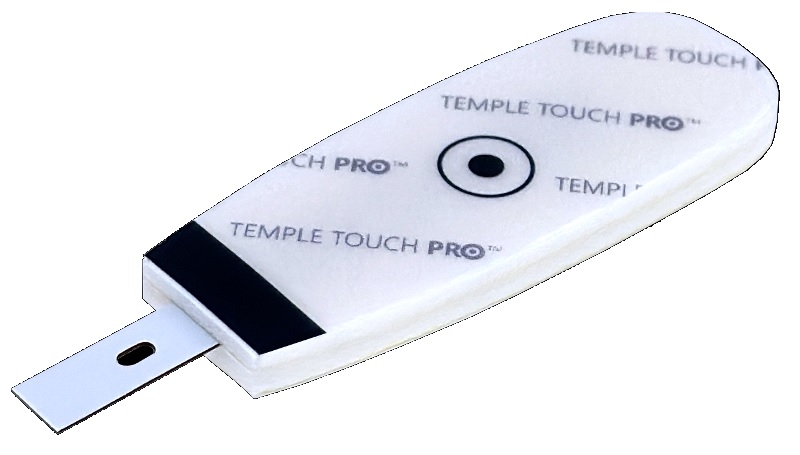
Temple Touch Pro™ - TTP™
Sensitive and quick to detect core temperature changes, quick to apply
Continuous non-invasive core temperature monitoring
Register and download the brochureRequest technical information
The importance of core temperature monitoring
Body temperature is a key factor in determining the outcome of a patient's illness: continuous monitoring of core temperature is essential in operating theatres and intensive care units and is considered the gold standard for patients undergoing general anaesthesia, especially in extensive surgery or regional anaesthesia cases where patients are at risk of hypothermia.
This parameter is considered an effective thermal indicator due to the difference in temperature between different parts of the abdomen: deep chest and abdominal temperatures tend to differ from those of the arms and legs, and skin temperature is influenced by the environment, peripheral tissue temperature, body temperature and more.
The goal is to maintain a CORE temperature of around 37 °C during various procedures, and any deviations from the normal body temperature range can be a source of complications for any patient.
Even one or two degrees of hypothermia can greatly increase the risk of surgical bleeding, surgical wound infection and delayed recovery; patients in intensive care are at greater risk of complications with greater intensity and serious clinical implications. General anaesthesia alone generates hypothermia of 0.5 to 1.5°C due to the redistribution of body heat.
Monitoring core temperature is not only useful for preventing hypothermia (including unintentional hypothermia) and overheating, but also helps healthcare professionals detect malignant hyperthermia.

The technology
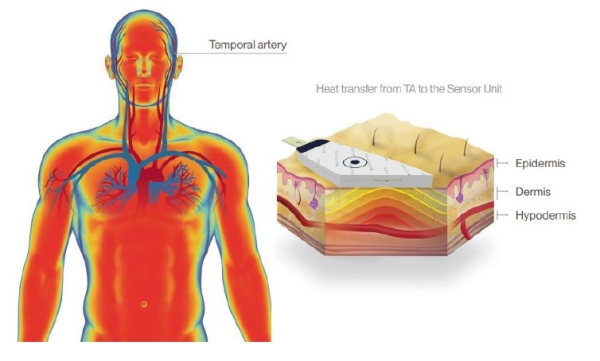
CORE temperature is defined as the temperature of the blood flowing through the pulmonary artery.
Based on known parameters, it is possible to use the blood flow characteristics of the temporal artery to derive the core temperature.
The sensor unit is applied to the skin over the temporal artery and measures heat flow at multiple points.
The TTP monitor (MCU) acquires data from the sensor and accurately calculates the patient's core body temperature.


To download the data sheet, you need to access the restricted area:
Not registered?
Register now1. What is Temple Touch Pro used for?
2. How does Temple Touch Pro estimate CORE temperature?
3. Is non-invasive CORE temperature estimation clinically reliable?
4. When is a non-invasive method preferable for CORE temperature monitoring?
5. Can Temple Touch Pro replace invasive CORE temperature probes?

WHAT ARE YOU LOOKING FOR?
-
Anesthesia and Sedation EpiFaith® Syringe Xcope Patient Temperature Management Temple Touch Pro™ - TTP™ Water Hyper-Hypothermia Equipment Esophageal cooling device Air Hyperthermia Equipment Airway Management TCI - Total Control Introducer IS3-L video laryngoscope IS3-R rigid video laryngoscope I-Workstation ™ airway management monitor Tracheotec® Duravent® Duratwix® Duracuff® Spiraflex® Hemostatic devices GuardaCare® OneStop™ Vascular Hemodynamic Monitoring Non-Invasive & Continuous Hemodynamic Monitoring Thermodilution Catheters Noninvasive Hemodynamic Monitoring - CNAP Catheters Locking Solutions DURALOCK-C A better way to manage lines connections Yewtwist Esophageal pressure monitoring NutriVent™ esophageal pressure monitoring catheter OptiVent™ DVT prevention devices Fitlegs® AES Grip Fitlegs® AES Fitlegs® Class 2 Fitlegs® graduated compression socks geko
CLINICAL SPECIALTIES SEDA

Distributors of quality medical products and equipment.
REGISTER TO GET MORE TECHNICAL INFORMATION!
Register to get access to the complete and detailed descriptions of our products.
REGISTER NOW